

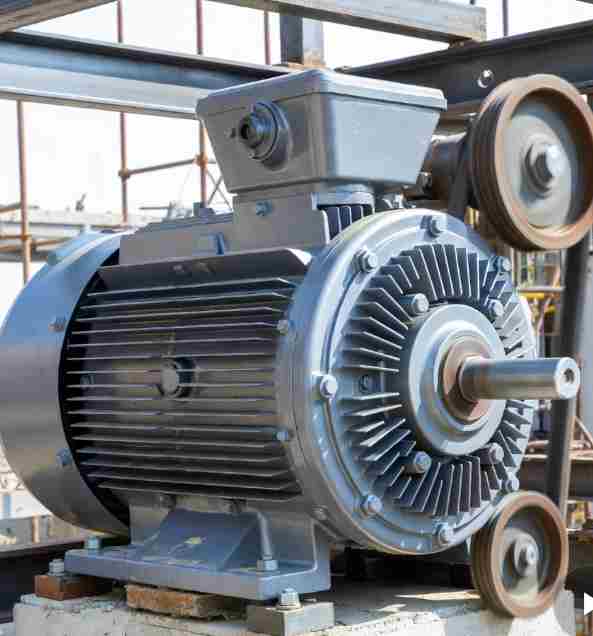
Innovations in High-Efficiency Motor Technology: A New Engine for Industrial Energy Conservation and Emission Reduction
Date: 2025-12-14 Categories: Faq Views: 14002
Excerpt:
High-Efficiency Motors: The Core Power and Cost-Cutting Tool Driving Industrial Green Transformation Against the global backdrop of “carbon peaking and carbon neutrality,” the continuous rise in industrial electricity costs has become a critical challenge manufacturing enterprises must confront. Statistics show that motor systems consume nearly 70% of industrial electricity. For enterprises pursuing sustainable development, high-efficiency motors are no longer merely a technical term—they directly impact
Article Catalog[Hidden]
High-efficiency motors: the core power and cost reduction tool to drive the green transformation of industry
In the global context of “Carbon Peak, Carbon Neutral”, the continuous rise of industrial electricity costs has become a serious challenge that manufacturing enterprises must face. According to statistics, the motor system consumes nearly 70% of electricity in the industrial field. For enterprises pursuing sustainable development, theHigh-efficiency motorIt is no longer just a technical term, but a key factor directly related to the profitability and competitiveness of enterprises. How to realize deep energy saving by upgrading the power system has become one of the hottest topics in the industrial world nowadays.
What is a truly efficient motor?
what is calledHigh-efficiency motorThe term "ultra-high efficiency" (UHE) is often used to refer to motors in which the use of new magnetic materials, optimized electromagnetic design, and improved manufacturing processes have led to significant reductions in various types of losses (e.g., copper, iron, and mechanical losses). In international standards, this type of motor usually corresponds to IE3 (Ultra High Efficiency).或IE4 (Ultra Super Efficient) energy efficiency class.
The average efficiency of a high efficiency motor can be increased by 3% to over 5% compared to a regular standard motor. While this may seem like a small number, the cumulative power savings will be staggering in industrial scenarios that run continuously throughout the year.
The “invisible bill” for whole life costs”
Many procurement managers faceHigh-efficiency motorThere is hesitation at higher initial purchase prices. However, this hesitation often leads to greater waste when viewed through a full life cycle cost (LCC) lens.
Total Lifecycle Costs of Electric Motors = Purchasing Costs + Maintenance Costs + Running costs of electricity
The data show that throughout the life cycle of a motor, theElectricity expenses as a percentage of total costs are upwards of 95%The initial purchase cost is less than 31 TP3T, which means that the selection of theEnergy-saving motorThe savings in electricity costs usually fully cover the extra purchase premium compared to a regular motor within a year or even half a year of operation.
Case study: a chemical plant's fan retrofit fact sheet
To provide a more intuitive demonstrationHigh-efficiency motorof energy savings, let's look at a real-life retrofit case.
A medium-sized chemical plant in Jiangsu had been facing huge pressure on energy consumption, and its circulating water pump system had been using traditional YE2 series motors for a long time. After an energy audit, the plant decided to replace five of the old 55kW motors withIE4 Energy Efficiency Class Permanent Magnet Synchronous Motor。
![[Keywords]](https://simo.org.cn/wp-content/uploads/2025/11/1764033167-565E4.jpg "[Keywords]")
Modified operating data shows:
- Significant current drop: The operating current drops by about 121 TP3T at the same load.
- Lower temperature rise: Due to reduced losses, the motor operating temperature is reduced by 10°C, indirectly extending the life of the insulation system.
- Economic benefits: Accounted for, the annual power saving of a single motor is about 24,000 kWh. Calculated on the basis of the industrial electricity price of 0.7 yuan/kWh.Five motors saved 84,000 yuan a year in electricity costs alone。
The enterprise in less than 10 months to recover the full investment cost of the equipment, subsequent operation is purely enjoy the energy saving brought about by the “net profit”.
Technical advantages of choosing high-efficiency motors
In addition to the direct financial rewards ofHigh-efficiency motorThey also show clear advantages in terms of technical performance. Due to a larger design margin and better materials, these motors runLess vibration, less noiseThis is especially important for precision manufacturing lines that require high-precision control and long-term stable operation. This is especially important for precision manufacturing lines that require high-precision control and long-term stable operation.
In addition, with the in-depth implementation of the national "Motor Energy Efficiency Improvement Program", the elimination of backward inefficient motors has been the policy red line. Early layoutEnergy-efficient motorsThe system can not only help enterprises avoid compliance risks, but also take the lead in the green supply chain to occupy a favorable position.


 Shaanxi Public Security Bureau No. 41032502000206